
How to Answer Interview Questions Clearly and Confidently
Updated: Oct 3

A useful interview answer gives the interviewer something they can understand and evaluate. Start with a direct point, support it with relevant evidence, and stop when you have answered the question. You can sound prepared without remembering a script.
The structure changes with the question. A request for a past example needs a real story. A hypothetical problem needs your reasoning. A question about your goals needs an honest explanation of your direction. Choosing the right structure is the first step.
Listen for what the interviewer is asking
Before reaching for your favorite example, identify the task. Are they asking what you did, how you would approach something, or why this role interests you? If a question has two parts, acknowledge both. If the wording is unclear, ask a short clarifying question.
In my experience interviewing candidates, a polished story can still be difficult to assess when it never addresses the question. You make the conversation easier by giving the answer first, then explaining the evidence behind it.
Give a direct opening, then a specific example
For “How do you manage competing deadlines?” you might begin, “I confirm the business impact and dependencies, then agree on priorities with the people affected.” Follow that with a true situation showing how you made the choice.
That sentence is an illustrative opening, not experience to claim. Your example should explain what was competing, what you owned, how you communicated the tradeoff, and what happened. An interviewer should be able to distinguish your contribution from the team’s work.
Use STAR for questions about past experience
The STAR method can help you organize a behavioral answer. You do not need to announce the four labels aloud.
Situation: Give the context the listener needs
Task: Explain your responsibility
Action: Describe your decisions and what you personally did
Result: Share the outcome and any useful lesson
A hypothetical example: “Two teams were using different delivery dates. I checked the source documents, confirmed the agreed deadline, and created one handoff checklist. The next delivery used the same timeline, and I learned to confirm ownership at the start.” Replace every detail with facts from your own work.
If the outcome was mixed, explain that. You can describe a corrected error, a clearer process, or a lesson without inventing revenue, percentages, or praise from a manager.
Explain your reasoning for hypothetical questions
For “What would you do if a customer complained about a delay?” start by clarifying what is known. Explain what you would check, who you would involve, what you could promise, and how you would update the customer. Keep assumptions visible.
Avoid jumping straight to a discount or a delivery guarantee. The interviewer may be testing whether you investigate before acting and understand the limits of your authority. If the scenario changes, adjust your answer instead of defending the first plan.
Handle a difficult question without filling the silence
Take a brief pause to choose a relevant example. For a weakness, describe a genuine issue and the steps you are taking. For a mistake, own your part and explain the correction. For something you do not know, name the gap and how you would check it.
If you drift off topic, you can say, “The part most relevant to your question is…” and return to the point. Our tough-question guide has more examples of handling these moments.
Practice one answer in two different ways
Choose one responsibility from the job description and a true example that demonstrates it. Record an answer, then listen once. Check whether your point is clear, your actions are specific, and the result follows from the story.
Try again with different wording. Ask a partner to interrupt with “Why did you choose that approach?” or “What would you change?” Knowing the facts makes it easier to respond naturally. A memorized paragraph gives you fewer options.
Finish after the outcome and let the interviewer ask for more. The goal is a useful conversation, not fitting everything you have prepared into one answer.
Ready to walk into your next interview with confidence?
The Confident Interview Method gives you a focused, one-hour way to choose stronger examples, answer difficult questions, and speak clearly without memorizing a script. Start here if you want a complete preparation process you can reuse before future interviews.

The Confident Interview Method
$29
One focused hour with 10 practical lessons you can use in your very next interview.
“After spending hours reading blogs and articles, I am so glad that I bought this. It covered what I think are the most important parts of interviewing. Thanks for making this so concise.” - Drew Whitehead
Prefer a faster, lower-cost option?
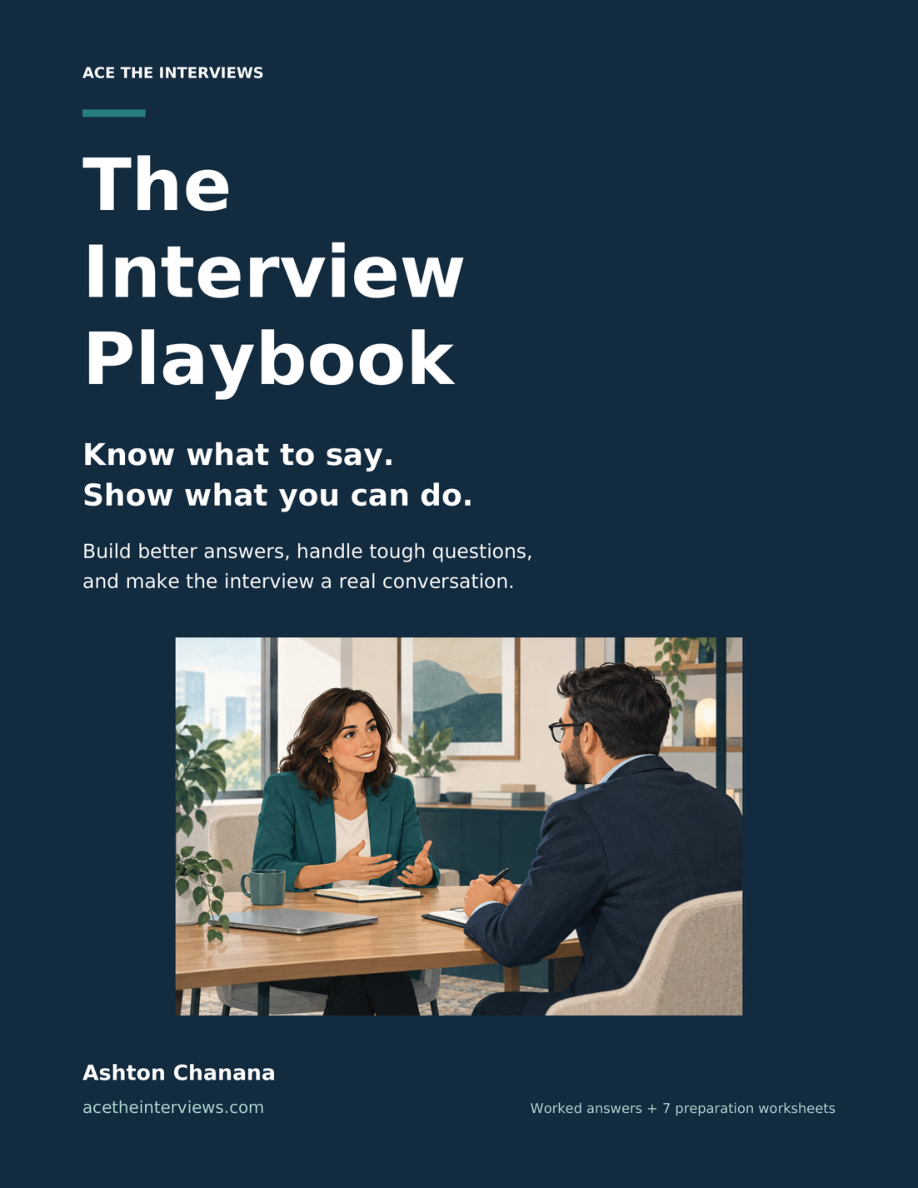
The Interview Playbook eBook gives you practical strategies for preparation, communication, body language, and interview practice that you can start using right away.
Frequently asked questions
How long should an interview answer be?
Give enough context to make your actions clear, then stop after the result. As a practice target, many behavioral answers fit in one to two minutes, but the question and any instructions should guide you.
Can I use the same example for more than one question?
Yes, if it genuinely demonstrates the skill being asked about. Change the emphasis and avoid forcing a familiar story into a question it does not answer.
What if I have no work example?
Use a relevant example from study, volunteering, a project, or another responsibility. Explain the setting accurately and how the skill transfers to the job.
Should I mention an unsuccessful result?
You can. Explain your contribution, what did not work, and what you changed or learned. A truthful account is easier to discuss than an invented success.



Comments