
B2B Sales Interview Questions: 15 Questions and Answer Examples

Updated: Oct 3
B2B sales interview questions test how you find suitable accounts, understand a business problem, and guide a buying decision involving several people. Prepare examples that show your judgment through the sales process, including deals that did not close.
The 15 questions below cover new business and account development. The answer examples are hypothetical. Replace them with your own facts, and adapt your preparation to the employer’s customers, product, and sales cycle.

Make your sales examples specific
When I interview a salesperson, I want to understand what they did and why. “I built a relationship” leaves too much unexplained. Tell me what you learned from the buyer, which obstacle you addressed, and what changed.
Prepare three real examples: a win, a loss, and a difficult situation you handled well. Include the deal context, your responsibility, the actions you took, and a result you can substantiate. The sales interview question bank gives you more ways to practice those examples.
Prospecting and qualification questions
1. How do you choose which accounts to target?
Explain how you assess customer fit and potential need. Consider the industry, size, existing process, relevant buying triggers, and whether the account can use what you sell. A recognizable company name alone does not make an account a priority. Describe the evidence you would seek before committing substantial time.
2. How would you reach a new prospect?
Use a relevant observation, a problem worth discussing, and a manageable next step. Hypothetical example: “Your distribution team is expanding. How are you managing supplier onboarding across the new locations? If consistency is becoming difficult, would a short conversation be useful?” Explain how your message changes for the recipient and channel.
3. What do you ask in discovery?
Ask about the current process, what is working, where difficulties occur, and the consequences. Explore what the buyer would like to change and how they would evaluate success. Follow their answers rather than firing through a questionnaire. Summarize the problem in their words and check your understanding.
4. How do you decide whether an opportunity is qualified?
Look for a problem you can address, a credible reason to act, access to relevant stakeholders, and a buying process you can understand. Explain what you know about funding and timing without pretending every early conversation has a confirmed budget. If the fit is weak, describe how you would disqualify respectfully.
5. How do you work with a buying committee?
Identify the people who will use, approve, fund, evaluate, and implement the solution. Find out whose support is necessary and what each person cares about. Work with your contact to arrange appropriate conversations. A helpful champion is valuable, but their enthusiasm does not establish everyone else’s agreement.
Value, objections, and negotiation questions
6. How do you build a business case?
Connect the proposed change to a business outcome and document the assumptions. Include implementation effort and ongoing costs. Hypothetical illustration: saving 10 staff hours a week at an assumed $40 per hour suggests $20,800 in annual time value over 52 weeks. That is potential capacity value, not automatically cash savings or profit. Validate whether those hours can actually be saved and used.
7. How do you respond to a price objection?
Clarify whether the concern is available budget, a competing offer, or insufficient value. Compare the full scope and discuss the outcome the buyer needs. Hypothetical response: “Which part of the price is hardest to justify, and what are you comparing it with?” Avoid offering a discount before understanding the issue.
8. How would you negotiate a discount request?
Understand what the buyer needs and what your business can approve. Explain how you would discuss an appropriate exchange, such as a change in scope or payment terms, subject to company policy. Do not promise concessions outside your authority. A good answer considers the relationship and the commercial impact.
9. What would you do when a deal stalls?
Check whether a business priority changed, a stakeholder is missing, or an evaluation step is unresolved. Offer a useful conversation rather than another vague “checking in” message. Hypothetical response: “We had planned to finish the evaluation this month. Has the priority changed, or is there a concern we have not addressed?” Update the forecast if the evidence changes.
10. How do you compete with an incumbent supplier?
Understand why the buyer uses the incumbent, what would justify switching, and the effort or risk involved. Compare your offer against the buyer’s criteria using verified information. If there is no meaningful reason to change, forcing urgency can damage credibility. Explain how you would earn a future conversation instead.
Results, pipeline, and teamwork questions
11. Tell me about a complex deal you won
Use a real example with enough context to make the result meaningful: the customer need, stakeholders, sales cycle, and your responsibility. Describe the turning point and your actions. State the outcome accurately, including other people’s contribution. Protect confidential customer information rather than sharing a sensitive proposal.
12. Tell me about a deal you lost
Choose a loss you can discuss honestly. Explain what you believed at the time, what evidence you missed, and what you changed afterward. Avoid blaming the buyer or dismissing the competitor. I listen closely to whether the lesson led to a practical change, such as involving procurement earlier or testing the decision criteria.
13. How do you prioritize and forecast your pipeline?
Separate an account’s potential value from its likelihood of closing soon. Explain how you assess customer activity, confirmed next steps, decision dates, and unresolved risks. Keep the CRM current. If you use weighted pipeline, recognize that stage probabilities are estimates, not a guarantee of revenue.
14. What do you do if you are behind target?
Start with the gap and the time left. Diagnose whether the issue is pipeline creation, qualification, conversion, deal size, or timing. Choose actions that address that constraint and agree on support with your manager. State the measurement period when explaining your own quota attainment. Extra activity is useful only if it addresses the actual problem.
15. How do you grow an existing account and work with other teams?
Understand the customer’s current outcomes before proposing more products or locations. Coordinate with service, implementation, or customer success so they know what was promised and why. Explain how you would address an unresolved problem before asking for expansion. Account growth depends on delivering value as well as identifying demand.
Practice a buying committee scenario
Hypothetical scenario: your contact wants to proceed, finance questions the cost, and the operations team worries about implementation. Explain which conversations you would arrange and how you would establish shared evaluation criteria. Do not assume the enthusiastic contact can approve the purchase alone.
If the role involves software, practice the tech and SaaS sales interview questions as well. For your overall preparation, use the sales interview preparation guide.
Ask the interviewer how opportunities are assigned, what distinguishes successful representatives, and which parts of the sales process need improvement. Your questions should help you assess the job as well as demonstrate preparation.
The course below can help you choose your strongest examples and explain your sales decisions clearly.
Ready to walk into your next interview with confidence?
The Confident Interview Method gives you a focused, one-hour way to choose stronger examples, answer difficult questions, and speak clearly without memorizing a script. Start here if you want a complete preparation process you can reuse before future interviews.

The Confident Interview Method
$29
One focused hour with 10 practical lessons you can use in your very next interview.
“After spending hours reading blogs and articles, I am so glad that I bought this. It covered what I think are the most important parts of interviewing. Thanks for making this so concise.” - Drew Whitehead
Prefer a faster, lower-cost option?
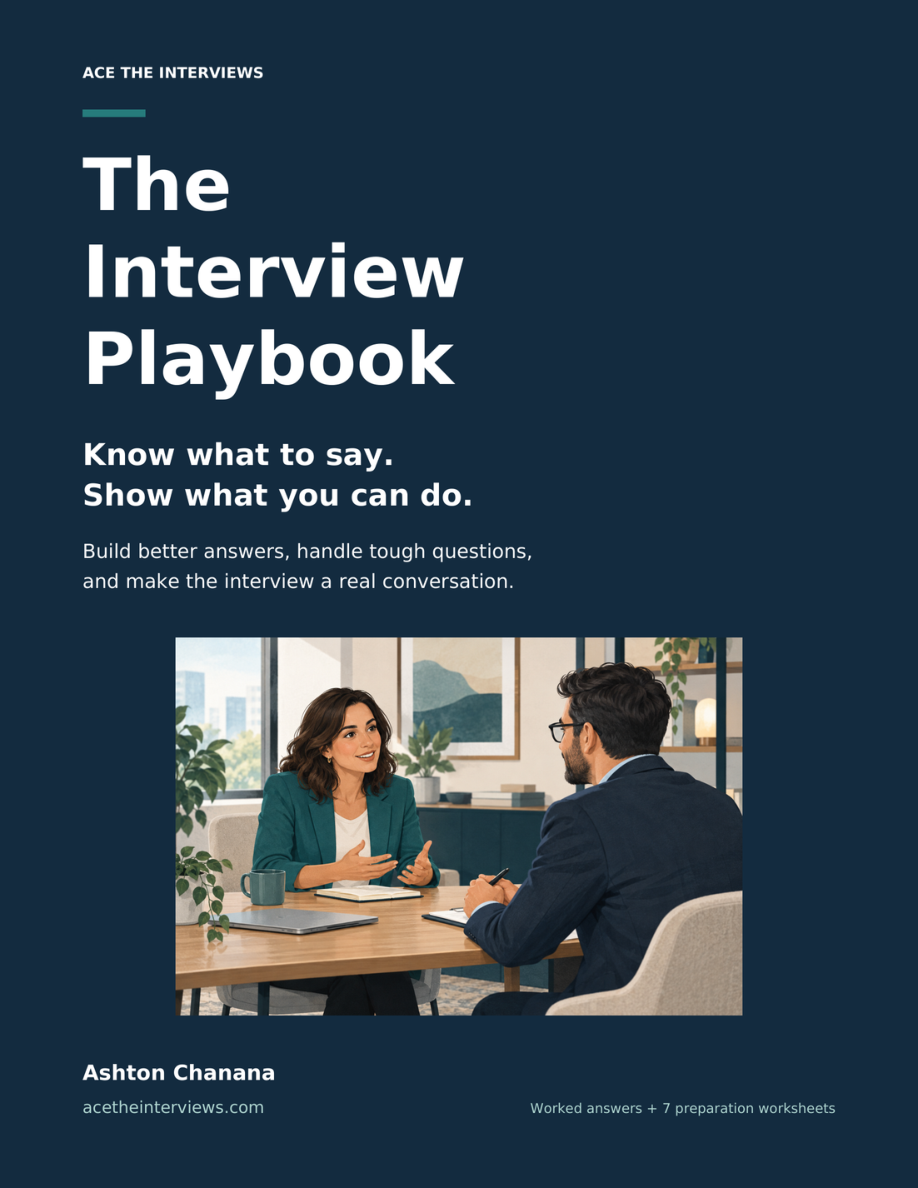
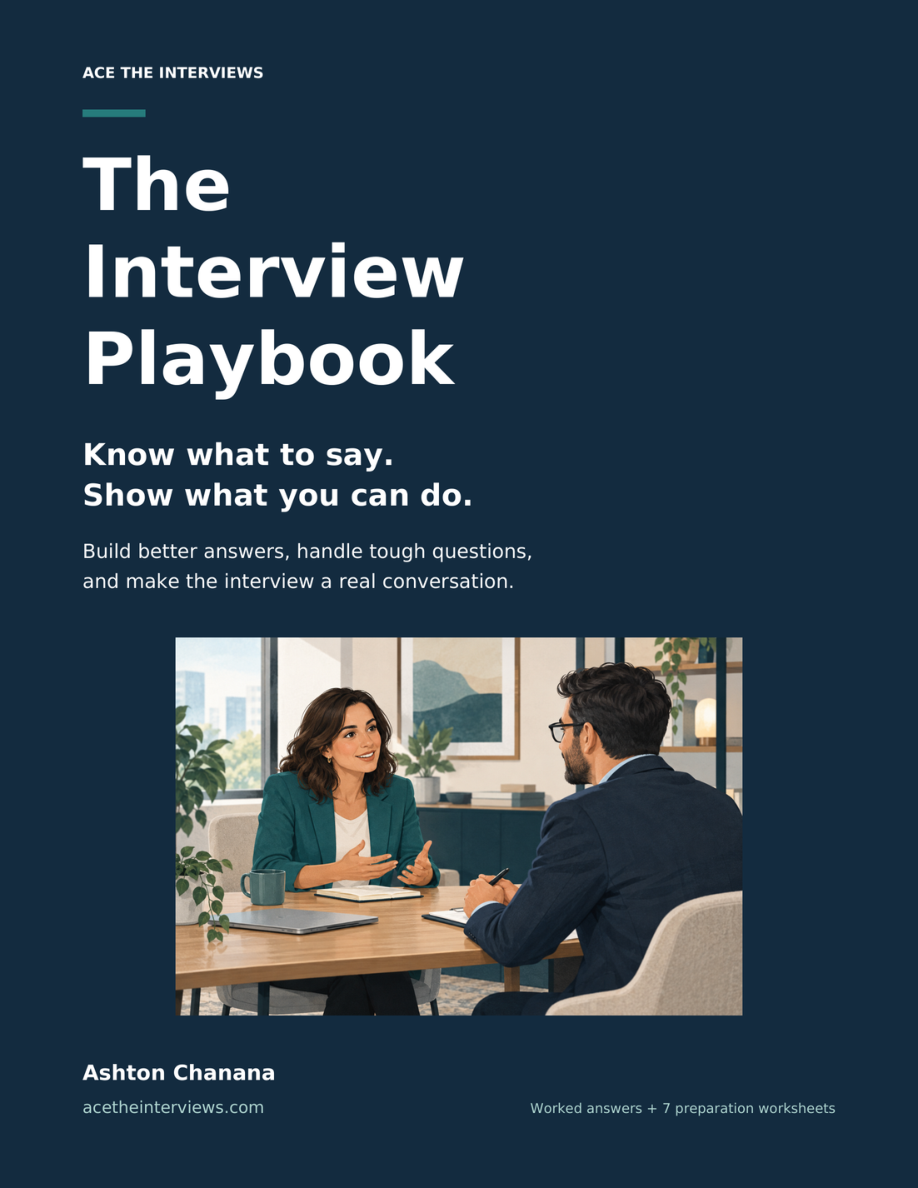
The Interview Playbook eBook gives you practical strategies for preparation, communication, body language, and interview practice that you can start using right away.
Frequently asked questions
What is different about a B2B sales interview?
A B2B sales interview often examines how you work through a business buying process with several stakeholders. Expect questions about discovery, qualification, commercial decisions, and evidence behind your forecast. The depth depends on the role and sales cycle.
What if I have only sold to consumers?
Use transferable examples from customer conversations, negotiation, follow-up, and meeting targets. Explain what you still need to learn about business purchasing and longer sales cycles. Do not present consumer sales experience as enterprise deal experience.
Should I use a qualification framework in my answers?
Use a framework if it helps explain your process, but show how you apply it. Naming BANT or MEDDICC without explaining the questions you ask or evidence you seek adds little. Adapt your answer to the employer’s approach.
How long should a sales example answer be?
Start with a concise account of the situation, your actions, and the outcome, then let the interviewer ask for detail. Practicing an initial answer of about one to two minutes can help you stay focused, but follow the conversation rather than a stopwatch.



Mình hay xem soi cầu XSMB với soi cầu MB mỗi ngày để kịp cập nhật trước giờ quay số, coi như thêm góc nhìn cho yên tâm. Ngoài việc đọc dự đoán XSMB, mình còn để ý thống kê lô gan và lô xiên để nhìn ra nhịp xuất hiện của vài bộ số quen. Thỉnh thoảng anh em trong nhóm cũng nhắc tới mấy công cụ như quay thử XSMB, Rồng Bạch Kim và dữ liệu lịch sử, vì dựa vào tần suất thực tế nên dễ soi lại cho rõ hơn. Mình cũng có ghé soicauxsmb.pro ở giữa quá trình tham khảo, chủ yếu để đối chiếu thêm chứ không kỳ vọng gì quá. Nói chung dự…
Mình chơi xổ số kiểu cho vui là chính, coi kết quả như một thói quen giải trí chứ không đặt nặng chuyện phải trúng lớn. Trước đây nghe bạn bè bàn về “cầu” với “dàn” suốt, mình cũng thử để ý xem có gì hay ho không. Theo dõi một thời gian thì thấy đôi lúc có vài dạng số lặp lại làm mình chú ý, nhưng mình vẫn tự nhắc phải tỉnh táo. Thỉnh thoảng lướt được mấy bài như https://soicauxsmb.io/dan-de-10-so-khung-3-ngay.html, mình ghi lại vài con cho nhớ rồi chờ hôm sau đối chiếu, coi thử có phải mình đang tự hợp lý hóa không. Có ngày trúng chút thì cười, có ngày sai hoàn toàn nên càng…