
How to Answer Tough Interview Questions Without Sounding Rehearsed
Updated: Oct 4
Tough interview questions are easier to handle when you prepare a few honest stories instead of memorizing perfect-sounding answers. Here’s a practical way to prepare for weaknesses, failures, conflict, and “Why should we hire you?”
Prepare stories, not scripts
You don’t need a word-for-word answer for every possible question. That usually makes people sound stiff.
Instead, prepare four or five stories from your experience that show:
A problem you solved
A mistake you learned from
A disagreement you handled
A project you’re proud of
A time you helped a team or customer
When I interview candidates, I can usually tell when someone is trying to remember a prepared answer word for word. They often sound confident at first, but once I ask a follow-up question, the answer starts to fall apart. The strongest candidates know the story they want to tell, but they are comfortable adjusting it based on the conversation.
Know the situation, your role, what you did, and what happened. Then adjust the story to fit the question.
Use STAR, but keep the story conversational

The STAR method can help organize your answer:
Situation: What was happening?
Task: What were you responsible for?
Action: What did you actually do?
Result: What changed because of your actions?
Don’t announce each part like you’re reading from a template. Tell the story naturally.
For example:
“Our customer onboarding process was creating delays. I was responsible for finding the bottleneck, so I mapped out each step and noticed that new customers were receiving information from several different people. I created a simpler handoff process, and the team was able to respond more consistently.”
The details should come from your real experience. Specificity is more convincing than polished language.
Answer “Why should we hire you?” with evidence
Avoid general statements such as “I’m hardworking” or “I’m a great team player.” Most candidates say something similar.
A stronger answer connects three things:
What the role requires
What you’ve done before
How that experience could help this team
For example:
“This role needs someone who can build trust with customers and stay organized across multiple priorities. In my last position, I managed several client relationships at once while also improving our follow-up process. I’d bring that same combination of communication and organization to this role.”
That answer is confident without pretending you’re perfect.
Handle the weakness question with self-awareness
Choose a real weakness that is relevant but manageable. Then explain what you’re doing to improve it.
A useful structure is:
“Earlier in my career, I struggled with ____. I noticed it was affecting ____, so I started ____. I’m still working on it, but I’ve made progress by ____.”
Avoid answers like “I care too much” or “I’m a perfectionist” unless you can explain the actual behavior behind them. Interviewers are usually listening for self-awareness, not a cleverly disguised strength.
Talk about failure without blaming someone else
When an interviewer asks about failure, they’re not necessarily looking for a disastrous story. They want to understand how you respond when something doesn’t go as planned.
Choose an example where:
You had a clear responsibility
You can explain what went wrong
You took ownership
You changed your approach afterward
Don’t spend most of the answer proving that the failure wasn’t your fault. Brief context is fine, but the useful part is what you learned and what you do differently now.
When I ask someone about a failure, the size of the mistake is rarely what determines how I view the answer. I pay much more attention to whether the person can explain their role honestly, take responsibility, and show me what they changed afterward.
Give yourself a moment before answering
A short pause is not a sign that you’re unprepared. Take a moment to choose the example that best answers the question.
I have never viewed a short pause as a sign that someone was unprepared. In most cases, it has the opposite effect. Candidates who take a few seconds to think usually give clearer answers than candidates who immediately start talking and try to figure out their point along the way.
You can say:
“That’s a good question. Let me think of the best example.”
“I haven’t faced that exact situation, but here’s how I would approach it.”
“I’d like to take a moment to organize my thoughts.”
Then answer directly. A thoughtful response is better than filling the silence with “um,” repeating the question, or rushing into a story that doesn’t fit.
Practice for flexibility, not perfection
Practice out loud, but don’t memorize a script. Try answering the same question in different ways.
Record yourself once or twice and listen for:
Long introductions
Vague claims
Too much background
Answers that never reach a clear result
Repeated phrases
A tone that doesn’t sound like you
The goal is not to sound flawless. It’s to sound prepared, clear, and comfortable enough to have a real conversation.
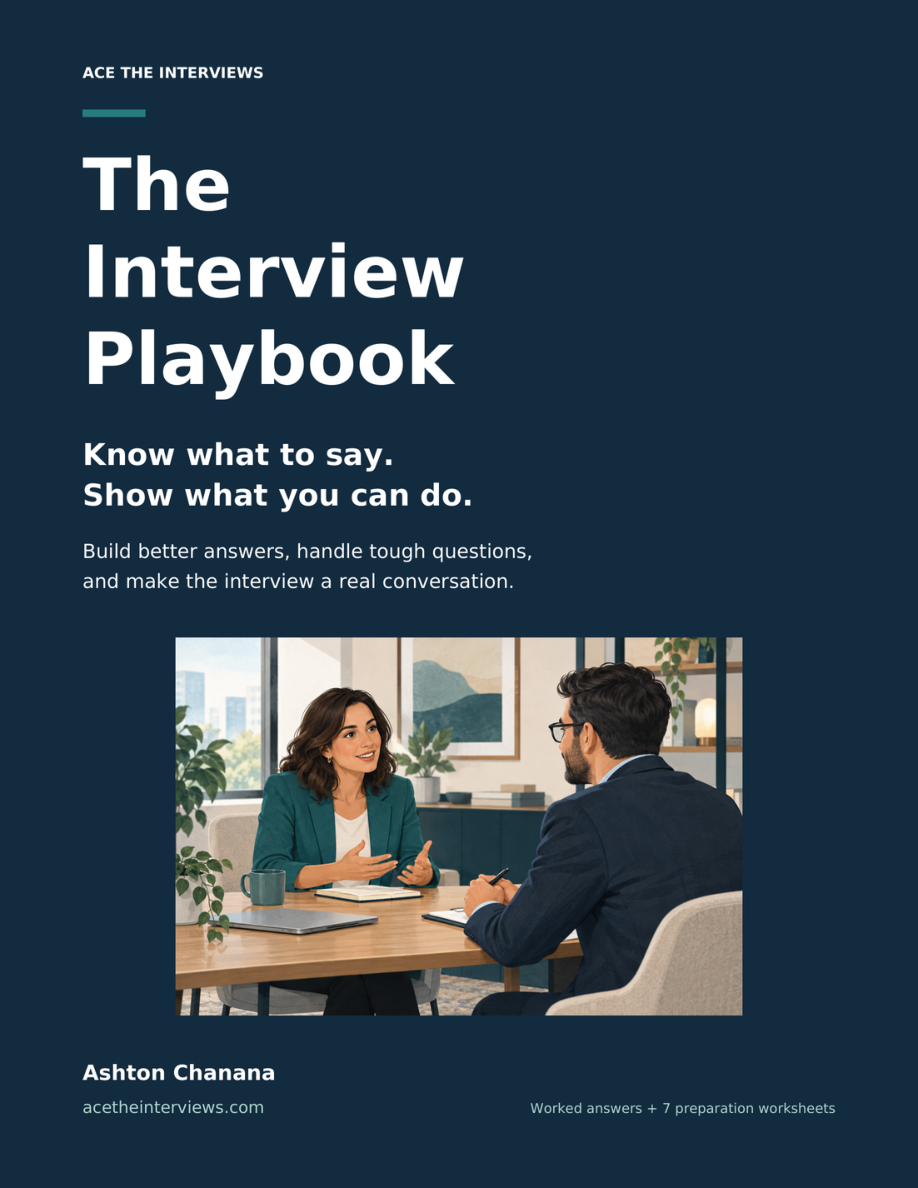
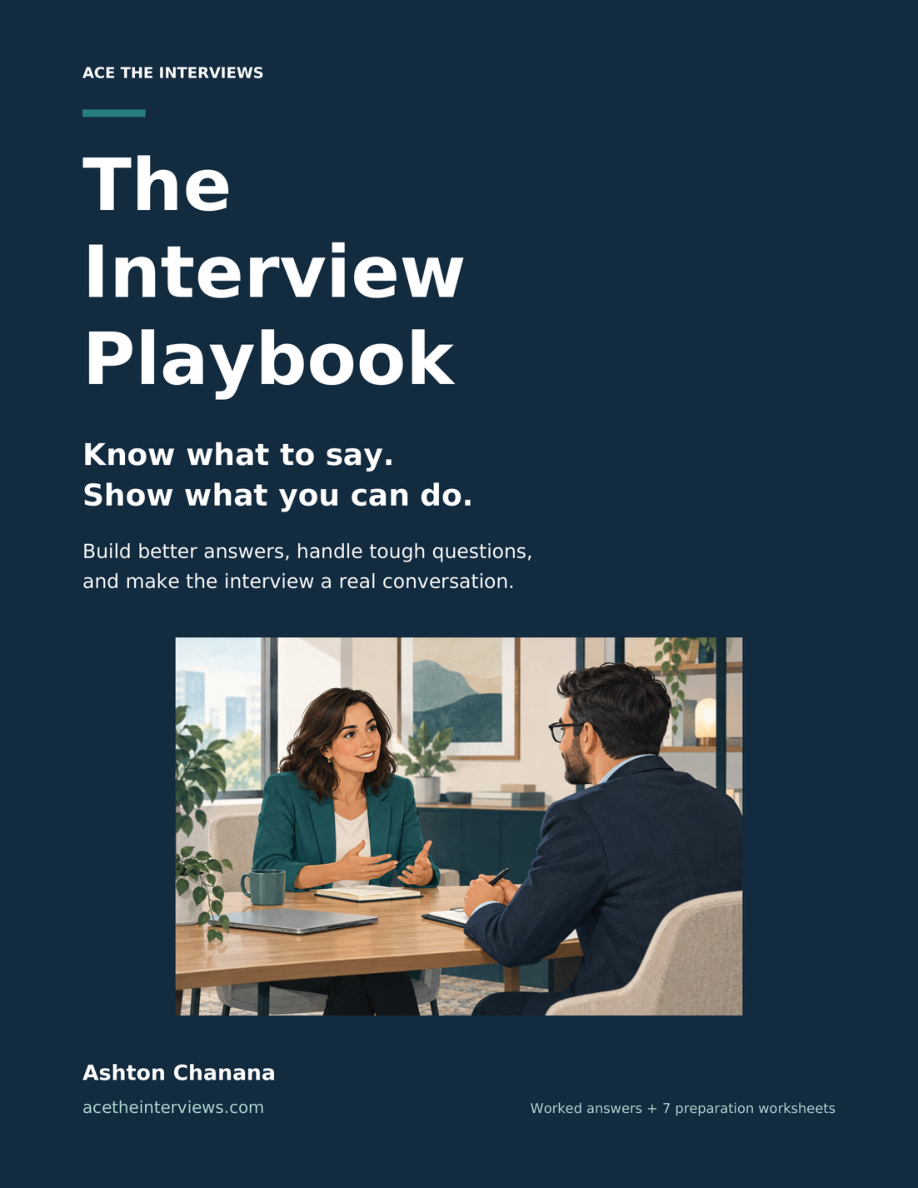
If you want a more structured way to prepare, The Confident Interview Method walks through choosing stronger examples, handling difficult questions, and speaking clearly without memorizing a script. The Interview Playbook eBook offers a lower-cost starting point.
Ready to walk into your next interview with confidence?
The Confident Interview Method gives you a focused, one-hour way to choose stronger examples, answer difficult questions, and speak clearly without memorizing a script. Start here if you want a complete preparation process you can reuse before future interviews.

The Confident Interview Method
$29
One focused hour with 10 practical lessons you can use in your very next interview.
“After spending hours reading blogs and articles, I am so glad that I bought this. It covered what I think are the most important parts of interviewing. Thanks for making this so concise.” - Drew Whitehead
Prefer a faster, lower-cost option?
The Interview Playbook eBook gives you practical strategies for preparation, communication, body language, and interview practice that you can start using right away.
Frequently asked questions
How do you answer tough interview questions without sounding rehearsed?
Prepare flexible stories and key points instead of memorizing complete scripts. Know the situation, what you did, and the result. Then adjust the wording to fit the exact question so your answer stays clear and natural.
How long should an answer to a difficult interview question be?
Most answers work best at around 60 to 90 seconds. Give enough context for the interviewer to understand the situation, spend most of your time on your actions and results, and stop before unnecessary details take over.
Is it okay to pause before answering an interview question?
Yes. A brief pause can make you look thoughtful, not unprepared. You can say, “That’s a good question. Let me think of the best example,” and then take a moment to organize your answer.
What should you say when you do not know the answer?
Be honest, but do not end the answer there. Explain how you would think through the problem, what information you would gather, or which past experience comes closest. That is stronger than guessing and hoping you sound confident.
How can you practice interview answers without memorizing them?
Practice telling the same story in a few different ways. Use short bullet-point reminders, record yourself, and have someone ask follow-up questions. The goal is to keep the main ideas consistent while allowing the wording to change naturally.



Comments