
Interview Confidence Practice: A 15-Minute Routine
Updated: Oct 3

If you have already done your research but still feel scattered, use a short practice session to make the next step concrete. This 15-minute routine focuses on one useful example, one follow-up question, and a quick logistics check.
The aim is to make your preparation easier to use. You do not have to feel perfectly calm or look unusually confident to explain your experience clearly.
Minutes 0 to 3: Choose one job responsibility
Read the job description and select a responsibility you expect to discuss. Choose something specific, such as coordinating deadlines, troubleshooting a problem, or handling a customer concern. Then pick a true example that shows the skill.
If you are changing careers, identify the connection between the previous setting and the new role. You can explain a transferable skill without pretending the work was identical.
Minutes 3 to 6: Write three reminder points
What was the problem or task?
What did I personally decide or do?
What happened, and what did I learn?
Use short notes, not a full script. Include only facts you know and are permitted to share. If the outcome had no clear metric, describe it plainly. A completed handoff or corrected error can be a useful result.
The STAR method can help if you need a little more structure. Keep most of the detail on your actions rather than the background.
Minutes 6 to 9: Say the answer aloud
Begin with the point you want the interviewer to understand. Then explain the example and finish with the result. Record yourself if that helps you notice where the explanation becomes unclear.
A hypothetical opening might be, “I handle competing requests by checking the deadline and who is waiting on the work.” Your story should show how you used that approach in a real situation.
In my experience interviewing candidates, I find it easier to follow an answer when I can identify the person’s contribution. That is a practical thing to check in a recording: can a listener tell what you did?
Minutes 9 to 12: Take one follow-up
Ask a partner, or ask yourself, “Why did you choose that approach?” Answer with the facts you remember. Then try “What would you change next time?” A useful answer can include something you would handle differently.
If you lose your place, pause and return to the main point. You can say, “The important decision was…” and continue. Practice recovering once instead of restarting the whole answer every time you stumble.
Minutes 12 to 15: Check the plan and stop
Confirm the interview time and time zone, location or meeting link, and anything the invitation asks you to bring. Set aside your documents and a few questions for the employer. Use the employer’s instructions for any notes or tools allowed during an assessment.
Write one improvement to work on next time. Then end the session. This is a suggested practice schedule, so adjust it if a particular example needs more work. Avoid turning a short rehearsal into an evening of trying to predict every question.
Keep your attention on the conversation
Choose a comfortable position, listen to the full question, and use natural gestures and eye contact. You do not need to monitor every movement. If something is unclear, a short request for clarification can help you give a more accurate answer.
For the broader preparation process, use the interview confidence guide. For practical ways to manage nerves before and during the meeting, read overcoming interview anxiety.
Review progress with a concrete question
After the interview, note one answer that was clear and one example to improve. You usually cannot tell the hiring decision from a pause or a facial expression. Focus your review on what you can practice.
Confidence may feel different from day to day. A usable story and a simple plan still give you something reliable to return to.
Ready to walk into your next interview with confidence?
The Confident Interview Method gives you a focused, one-hour way to choose stronger examples, answer difficult questions, and speak clearly without memorizing a script. Start here if you want a complete preparation process you can reuse before future interviews.

The Confident Interview Method
$29
One focused hour with 10 practical lessons you can use in your very next interview.
“After spending hours reading blogs and articles, I am so glad that I bought this. It covered what I think are the most important parts of interviewing. Thanks for making this so concise.” - Drew Whitehead
Prefer a faster, lower-cost option?
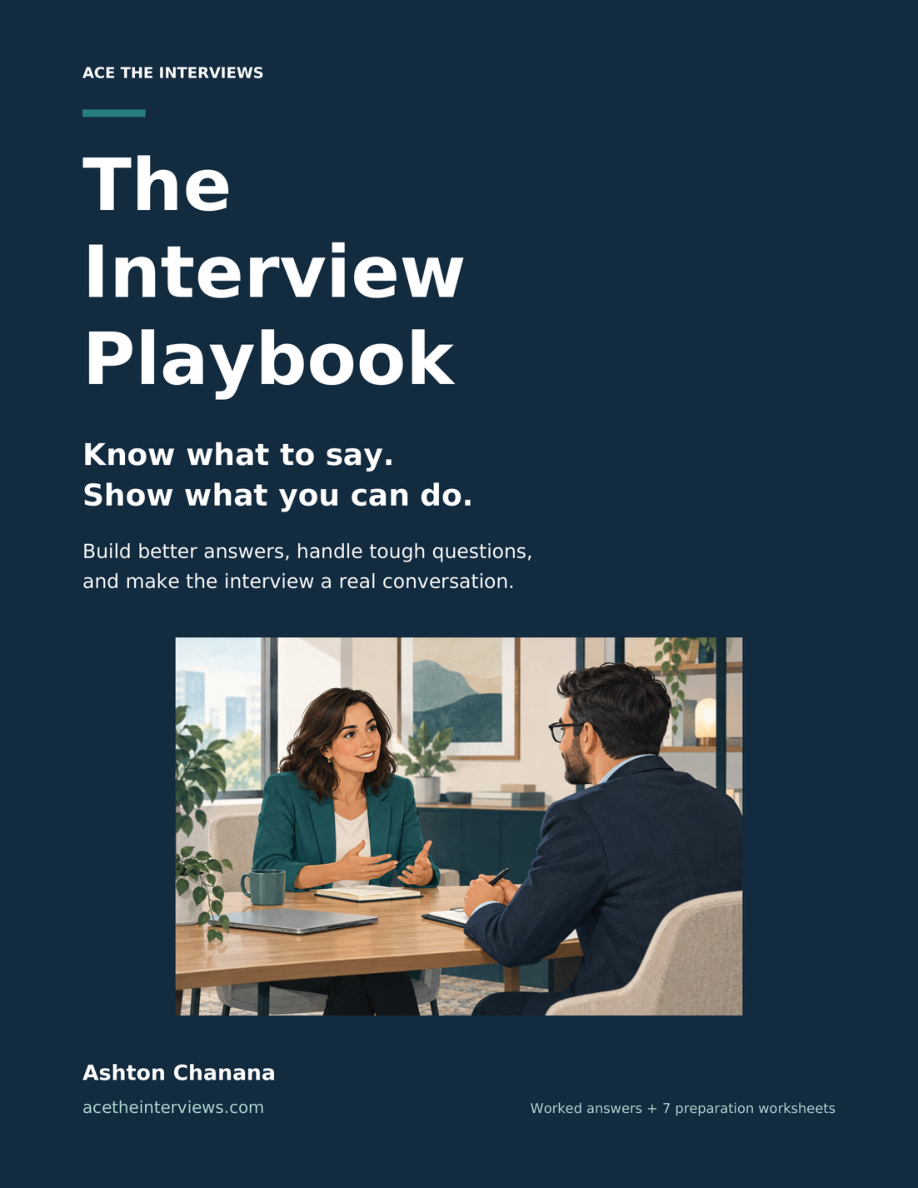
The Interview Playbook eBook gives you practical strategies for preparation, communication, body language, and interview practice that you can start using right away.
Frequently asked questions
Can 15 minutes replace full interview preparation?
No. This routine is a focused practice session. You still need to understand the role, review the invitation, and prepare the examples or exercises the interview requires.
Should I write out my whole answer?
Reminder points are often easier to adapt. If you draft a full answer to organize your thinking, practice saying it in different words rather than memorizing it.
What if I still feel nervous after practicing?
You can still use your examples and ask for clarification when needed. Preparation is not a guarantee that nerves disappear. Seek appropriate support if anxiety is difficult to manage beyond interviews.
How should I judge improvement?
Check whether your point is clear, your own actions are specific, and you can respond honestly to a follow-up. Focus on those details rather than trying to sound flawless.



Comments