
VP of Marketing Interview Questions: 10 Executive Answers
Updated: Oct 3
VP of marketing interview questions test how you set direction for the marketing function, make investment decisions and take responsibility for its contribution to the business. Prepare examples that connect customer understanding, team capability and commercial goals.
A VP’s scope depends on the company. You may report to a CMO, lead all marketing or own a major region or function. Clarify that scope and explain decisions at the level of authority the role actually carries.

Build an executive evidence set
Prepare examples of setting strategy, reallocating resources, building a team and presenting an uncertain decision to leadership. Note the context, alternatives, your decision and outcome.
Review the company’s business model, customer segments, growth stage and public commitments. Bring a point of view with assumptions clearly labeled, rather than promising results before you see the internal evidence.
When I interview leaders, I want to understand the tradeoff behind a recommendation. An executive answer should make the choice, its rationale and its risks clear. Our marketing interview preparation guide helps you organize the research.
10 VP of marketing interview questions
1. How do you set a marketing strategy for the business?
Begin with the company’s goals, customer needs, market position and constraints. Explain how you choose the audiences, offer priorities and investment areas.
Use a real example with a clear tradeoff. Show what you stopped or deprioritized so the strategy could be delivered with the available resources.
2. How do you decide where to invest?
Compare the evidence, expected contribution, time horizon, cost and risk of the options. Include people, systems and existing commitments as well as campaign spend.
Explain how you revisit a decision when assumptions change. Avoid treating last quarter’s attributed return as a complete guide to the next investment.
3. How do you balance brand building and near-term demand?
Explain the customer buying process, business stage and time available for results. Agree on the role of each investment and the appropriate measures.
There is no universal budget split to quote. Describe how you made a choice in a particular context and what evidence informed the review.
4. How do you align marketing, sales and finance?
Agree on business goals, customer fit, measurement definitions and planning assumptions. Create a review process that connects demand, sales outcomes and investment.
Use a disagreement you helped resolve. Explain how the teams reached a decision rather than claiming that one dashboard removed every conflict.
5. How do you communicate with the CEO or board?
Lead with the decision or issue, the business implication and your recommendation. Explain the evidence, assumptions and risk that matter most.
Be ready to show the detail, but do not begin with every channel metric. Make clear what you know, what is uncertain and what action you need approved.
6. How do you build and develop a marketing leadership team?
Start with the capabilities needed for the strategy and the team’s current strengths. Explain where you develop people, clarify responsibilities or hire.
Give an example of coaching a leader or addressing a performance gap. Show how you set expectations and assessed progress instead of relying on personality labels.
7. How would you enter a new market?
Assess the customer problem, competitive alternatives, product fit, routes to market and operational readiness. Understand local context before copying an existing campaign.
Propose a limited validation plan with decision criteria. A large market estimate does not establish that the business can acquire and serve those customers profitably.
8. Tell me about a major marketing decision that failed.
Explain the assumption, your responsibility and the evidence that challenged the plan. Describe how you adjusted investment, scope or direction.
A credible answer includes the cost or consequence and what changed in your decision process. Avoid blaming execution for every strategic mistake.
9. How would you respond to a significant budget reduction?
Clarify the revised business priorities and fixed commitments. Assess which work protects essential operations, which supports the most important goals and which can stop.
Present choices with consequences for results, people and timing. Explain how you would communicate a revised plan without pretending the same output is possible with materially fewer resources.
10. What would your first 90 days look like?
Begin with customers, financial assumptions, the team, commitments and measurement quality. Agree with leadership on the diagnosis before proposing broad changes.
Describe the decisions you aim to make and the evidence you need: priorities, investment options, capability gaps and a review process. Avoid an unsupported percentage-growth promise.
Practice: present a difficult investment decision
Hypothetical brief: sales wants more immediate pipeline, the product team needs launch support and finance is holding the budget flat. The team cannot fully fund all three priorities.
Ask about the business objective, conversion lag, existing commitments and customer evidence. Present two or three options, including what each would stop or delay, then make a recommendation with its assumptions.
Practice a short executive explanation using our marketing case interview guide. The useful part is the decision and its consequences, not the number of slides.
Questions to ask the executive team
What business outcome should this VP influence most?
Which decisions and budgets would I own?
Where are leadership’s expectations least aligned?
What would make the first six months successful?
Compare the scope with our CMO interview questions and marketing director interview questions. Use the employer’s responsibilities to decide which examples belong in this conversation.
Ready to walk into your next interview with confidence?
The Confident Interview Method gives you a focused, one-hour way to choose stronger examples, answer difficult questions, and speak clearly without memorizing a script. Start here if you want a complete preparation process you can reuse before future interviews.

The Confident Interview Method
$29
One focused hour with 10 practical lessons you can use in your very next interview.
“After spending hours reading blogs and articles, I am so glad that I bought this. It covered what I think are the most important parts of interviewing. Thanks for making this so concise.” - Drew Whitehead
Prefer a faster, lower-cost option?
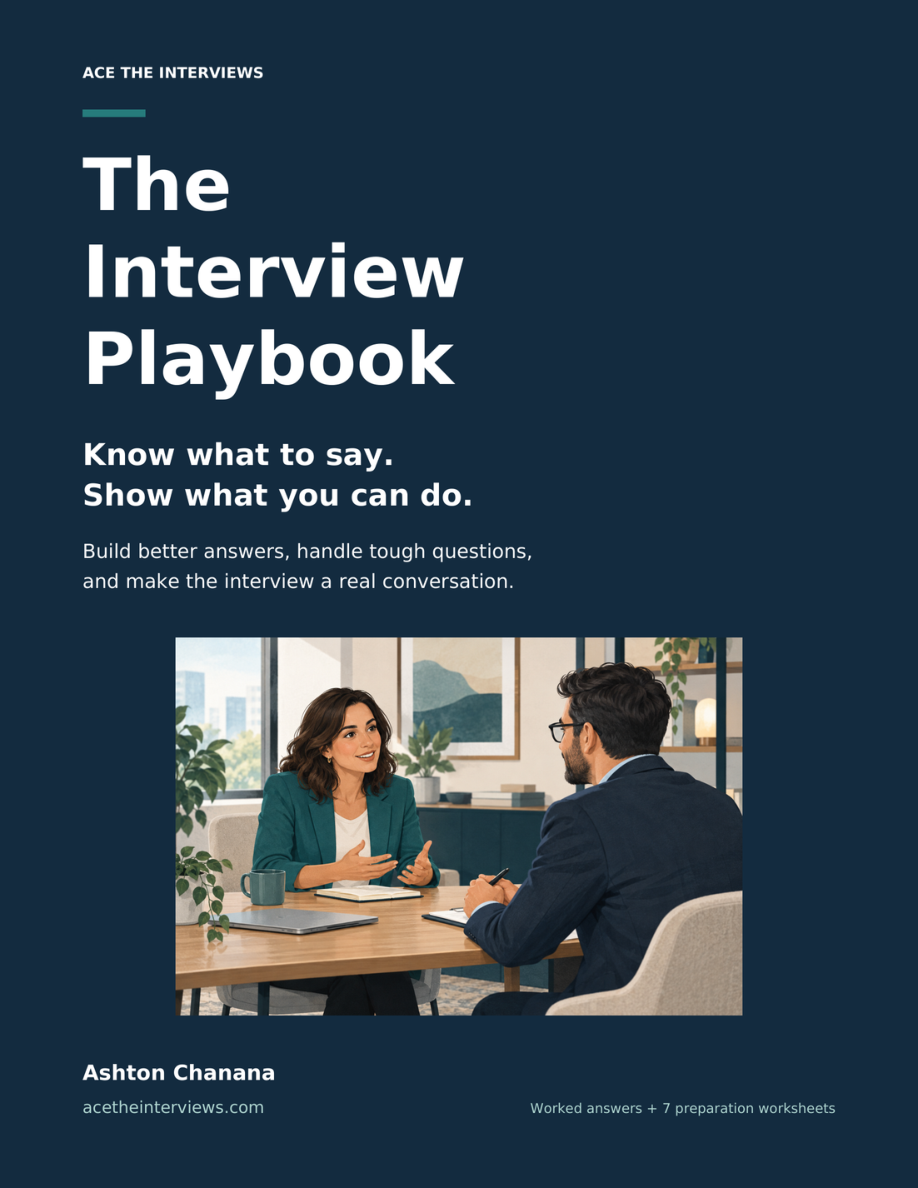
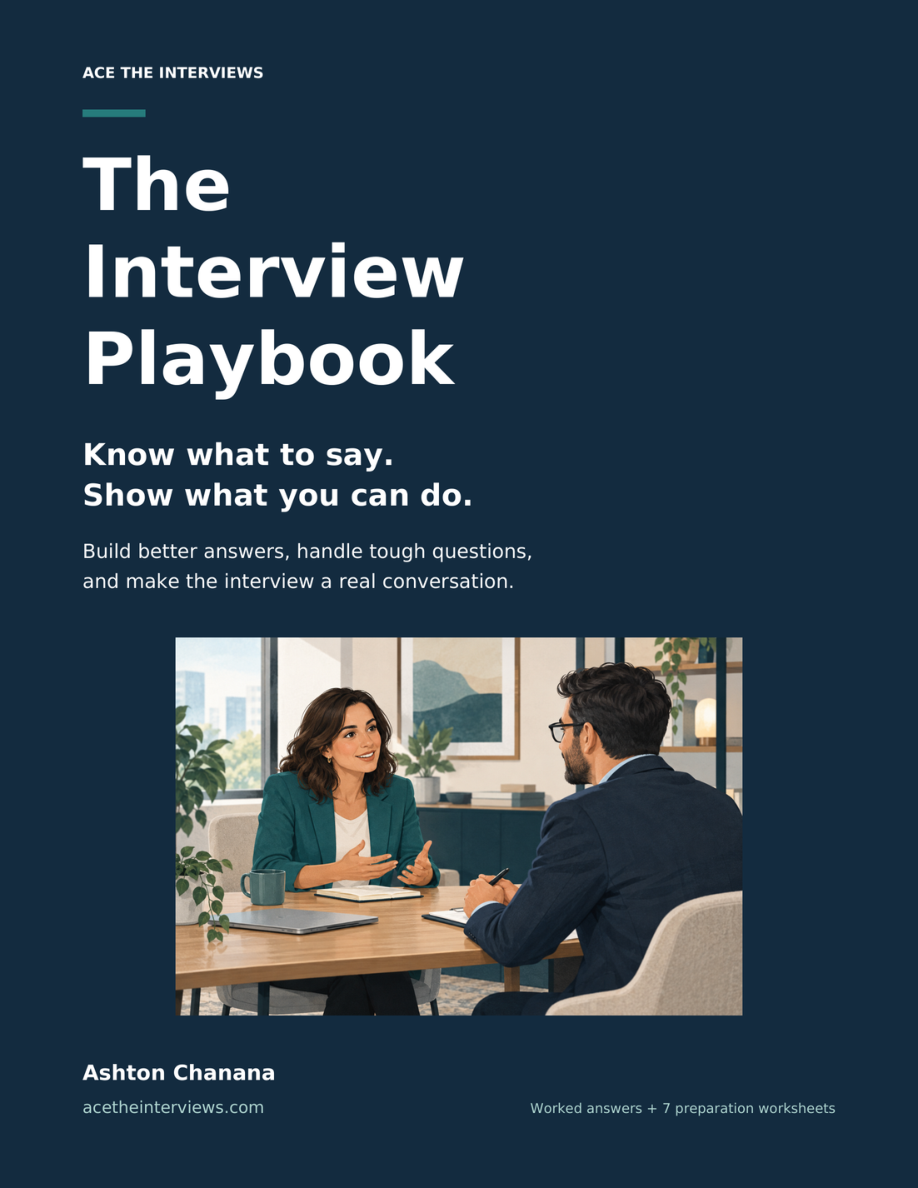
The Interview Playbook eBook gives you practical strategies for preparation, communication, body language, and interview practice that you can start using right away.
Frequently asked questions
What should a VP of marketing prepare for an interview?
Prepare examples of strategy, investment decisions, team leadership and executive communication. Connect each decision to the business context and explain the outcome and limits.
How is a VP of marketing different from a CMO?
The difference depends on the company’s structure. A VP may lead a function or report to a CMO, while some VPs lead all marketing; clarify scope, reporting and authority.
Should I bring a marketing strategy to the interview?
Bring a concise point of view if requested or useful, with assumptions labeled. Explain what you would validate before turning it into an investment or execution plan.
How should I discuss results from a previous employer?
Use figures and examples you are permitted to share. Explain your role, the business context and measurement limits without exposing confidential details or claiming sole credit for team results.



Comments