
Inside Sales Interview Questions: 10 Practical Answer Guides

Updated: Oct 3

Inside sales interview questions test how you find opportunities, understand a buyer, and keep the process moving through calls, email, and video meetings. Prepare real examples that explain your decisions, not just the sales terminology you know.
Read the job description first. A role focused on setting qualified meetings differs from one that owns discovery, demos, and closing. Match your preparation to the responsibilities this employer is hiring for.
1. Walk me through your sales process
Explain how you research an account, start a conversation, understand the problem, qualify the opportunity, and agree on a next step. Name what you personally own and where another team takes over. Show how the process changes when the buyer needs more information or is not a fit.
2. How do you choose prospects?
Describe your criteria for fit and a reason to contact the account. Explain where your information comes from and what remains an assumption. “They are in our target industry” is a starting point; a relevant business issue makes the outreach easier to explain.
3. How do you qualify a lead?
Explain how you learn about the problem, its importance, the people involved, and the decision process. Ask useful questions rather than running through a checklist without listening. Include when you would disqualify or pause an opportunity.
4. How would you open a discovery call?
Set a brief agenda, confirm what the buyer wants from the conversation, and ask about their current situation. In my sales and client-experience work, understanding what someone needs to decide is often more useful than giving them every detail at once.
A hypothetical opening: “We have 20 minutes. I’d like to understand what prompted your inquiry and how you handle this today, then decide together whether a next conversation would be useful.” Adjust the time and wording to the situation.
5. Tell me about an objection you handled
Describe the concern before your response. Was it price, timing, fit, or uncertainty about the outcome? Explain what you asked, what you learned, and the next step. A deal that did not close can still show judgment if you recognized a genuine mismatch. See the objection-handling guide for more practice.
6. What do you do when a prospect stops responding?
Explain how you use the agreed next step, relevant information, and the employer’s outreach process. A useful follow-up has a reason beyond asking for a reply. Show that you can stop or change the approach when continued contact is unhelpful.
7. Tell me about a missed target
Give the period, the target definition, and the actual result you are permitted to share. Explain what was within your control and what you changed. Distinguish weak prospect fit, low meeting conversion, and slow deal progression instead of treating every miss as a need for more activity.
8. How do you use a CRM?
Name a task you have actually performed: recording a buyer’s priorities, maintaining next steps, checking stale opportunities, or reviewing a report. Explain how accurate records help the team. Do not claim experience with a tool simply because its name appears in the job description.
9. How do you work with other teams?
Choose a real handoff involving an account executive, sales engineer, operations team, or customer success partner. Explain why you involved them and what they needed to know. Make the division of work clear without taking credit for the whole outcome.
10. How do you respond to coaching?
Describe specific feedback, what you changed, and how you checked the next attempt. If the result is still developing, say so. An honest account of adjusting a discovery question is more useful than saying you are always coachable.
Practice a short prospecting role-play
Use this hypothetical exercise: the buyer already has a provider and says they are not looking to change. Ask a question about what is working, listen for a relevant gap, and explain one possible next step only if it fits. Do not assume the interviewer wants an aggressive close.
Before starting an employer’s exercise, clarify the product, audience, goal, and any rules. Afterward, explain the choices you made and what you would want to learn next. Our sales assessment guide covers other common exercise formats.
Questions to ask about the role
What does this rep own from first contact to close?
How are qualified meetings or opportunities defined?
Where does the process most often stall?
What coaching and ramp support are available?
What would a useful first 90 days look like?
Bring four or five true examples and practice explaining them aloud. Include a win, a loss, a difficult conversation, and a change you made after feedback. Keep client information confidential.
Ready to walk into your next interview with confidence?
The Confident Interview Method gives you a focused, one-hour way to choose stronger examples, answer difficult questions, and speak clearly without memorizing a script. Start here if you want a complete preparation process you can reuse before future interviews.

The Confident Interview Method
$29
One focused hour with 10 practical lessons you can use in your very next interview.
“After spending hours reading blogs and articles, I am so glad that I bought this. It covered what I think are the most important parts of interviewing. Thanks for making this so concise.” - Drew Whitehead
Prefer a faster, lower-cost option?
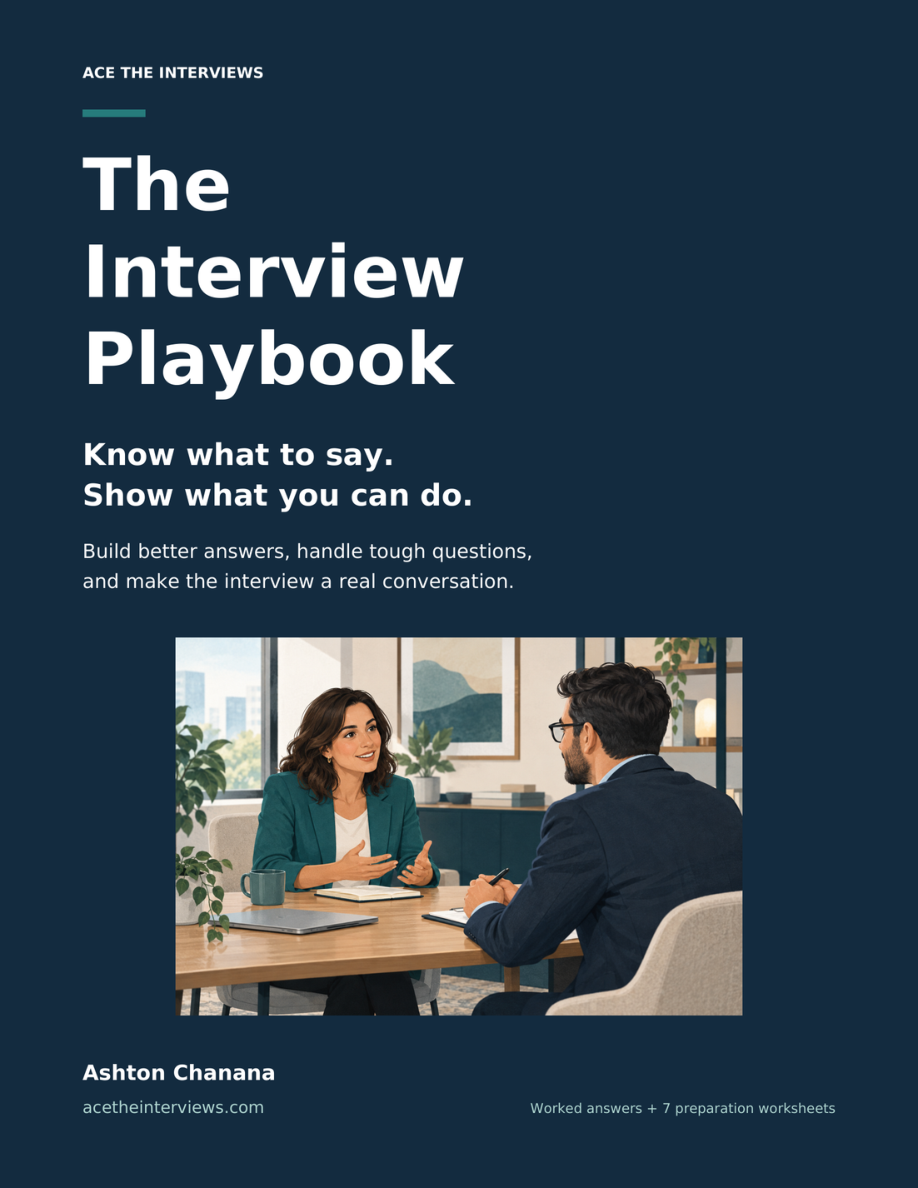
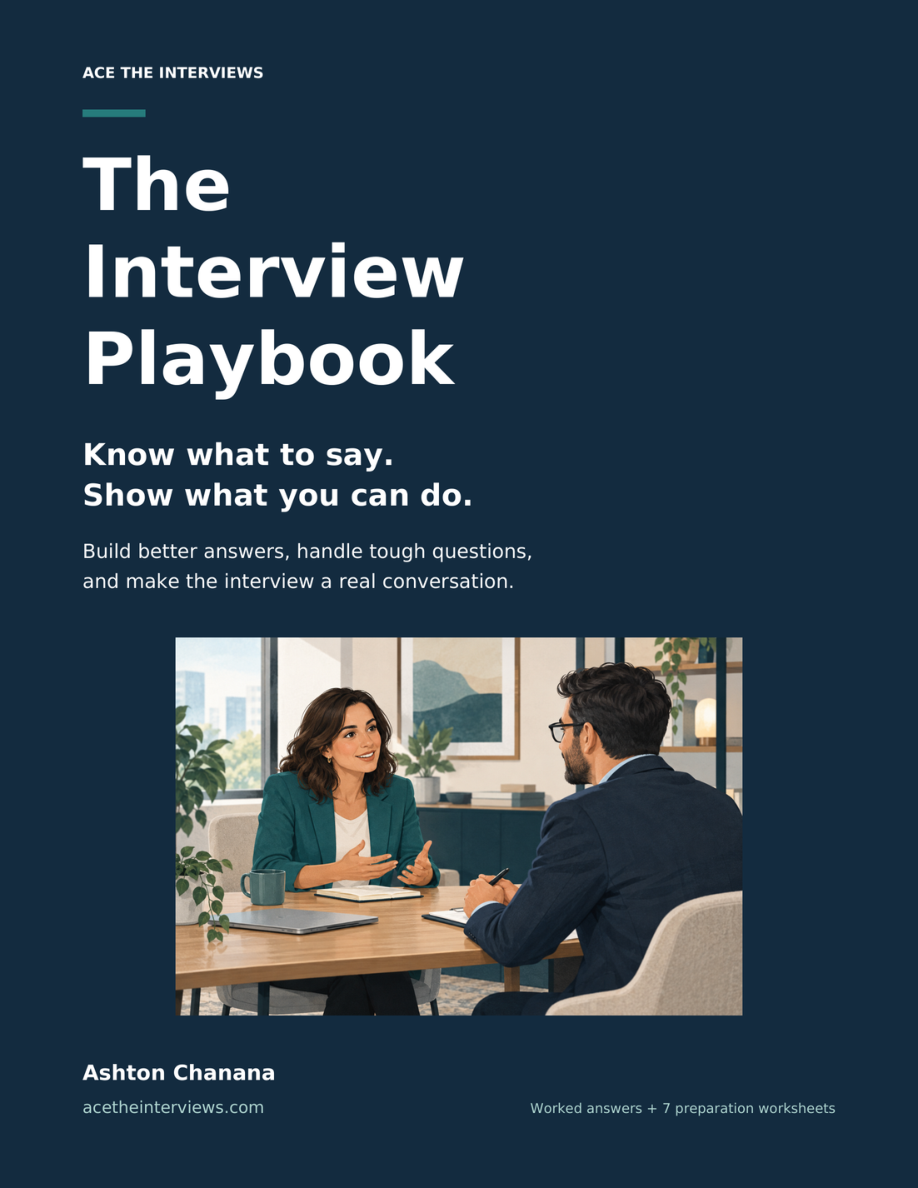
The Interview Playbook eBook gives you practical strategies for preparation, communication, body language, and interview practice that you can start using right away.
Frequently asked questions
What questions are common in inside sales interviews?
Prepare for questions about prospecting, qualification, discovery, objections, follow-up, targets, CRM habits, and teamwork. The mix depends on the responsibilities of the role.
How do I answer without sales experience?
Use relevant examples from service, retail, fundraising, or projects. Explain how listening, follow-through, and handling rejection transfer, while being honest about what you still need to learn.
Should I memorize sample sales answers?
Use examples to understand the structure. Prepare facts and reminder points so you can answer follow-ups in your own words.
Will I have to do a role-play?
Some employers use a sales exercise. Ask the recruiter about the format and follow the stated brief, tools, and time limits.



Comments