
Questions to Ask at the End of an Internship Interview

When an interviewer asks if you have any questions, find out what you’d work on, who would help you learn and what happens next. Bring three questions and a couple of backups so you can skip anything they’ve already answered.
If the job description says you’ll “support the team,” ask what that means on a normal Tuesday. You’ll learn more from one example of real work than from a broad question about company culture.
Already finishing an internship? Here’s how to prepare for your internship exit interview.
If you only have time for three questions
What would you want me to be able to handle by the end of my first month?
Who would review my work, and how would I get feedback?
What are the next steps in the hiring process?
That gives you a question about the work, one about support and one about the process. If the interview already covered one, swap in another question below.

1. What would I work on in the first few weeks?
A job description can list everything the team does without explaining what an intern actually owns. Ask for a realistic starting point.
Try: “Could you give me an example of a project I might help with in the first few weeks?”
Listen for a specific task, who uses the finished work and how much responsibility you would have. An answer like “you’ll support the team” leaves room for a useful follow-up: “What would that look like in a typical week?”
2. What would a successful internship look like?
Ask this if the team has described the tasks but hasn’t explained what it expects you to accomplish.
Try: “By the end of the internship, what would you hope I had learned or contributed?”
Listen for a project you’d finish, a skill you’d learn or a standard you’d work toward. If they name several goals, ask which one matters most.
3. Who would I work with, and how would I get feedback?
Knowing who assigns tasks and who checks your work can tell you more than a general promise of mentorship.
Try: “Who would I go to with questions, and how does feedback usually work for interns?”
If they mention a weekly check-in, ask what happens between meetings when a task is unclear. Look for a practical way to get help. An informal process isn’t automatically a problem, but you should understand how it works.
4. What do interns tend to find challenging?
Try: “What tends to take a new intern the longest to get comfortable with?”
Then ask: “Is there anything I could review beforehand to prepare for that?” You may learn that the real challenge is a reporting tool, changing priorities or understanding the customer. That gives you something concrete to prepare.
5. How would my work connect to the rest of the team?
Try: “Who uses the work an intern produces, and what does it help them do?”
If the role involves marketing reports, ask whether the team uses them to choose what to test next. If it involves sales research, ask how sellers use that research before a call.
6. What are the next steps and likely timing?
Try: “What are the next steps, and when would you expect to make a decision?”
If they don’t have a date yet, ask who to follow up with. If they’ve already explained the timing, thank them and move on.
How to turn their answer into a conversation
Use something the interviewer just said. For example, if they tell you that you’d help put together the weekly campaign report, you could ask:
“Who uses the report, and what would you want me to check before I send it?”
Their answer might tell you whether you’d just pull numbers or help the team understand what changed. That’s useful to know before you accept the role.
Choose questions based on who is interviewing you
Ask the recruiter about practical details like hours, pay, location and the hiring timeline. Save questions about day-to-day work and feedback for the person who would supervise you.
If something was already answered, acknowledge it: “You covered the project responsibilities earlier. Could I ask how my work would be reviewed?” That sounds more natural than repeating a question from your notes.
A simple way to close
If the work sounds interesting, say what stood out: “Thanks for explaining the campaign report. I’d like the chance to learn how your team uses it. Is there anything else you need from me before the next step?”
Practice this in five minutes
Circle one responsibility in the job description you’d like to understand better. Write down a question about it, one about who will review your work and one about next steps. Pick two backups from the list above.
Say your questions out loud once. If you have time to practice with a friend, ask them to give you a short answer so you can try a follow-up.
For the other side of the conversation, practice answering tough interview questions without sounding rehearsed.
Ready to walk into your next interview with confidence?
The Confident Interview Method gives you a focused, one-hour way to choose stronger examples, answer difficult questions, and speak clearly without memorizing a script. Start here if you want a complete preparation process you can reuse before future interviews.

The Confident Interview Method
$29
One focused hour with 10 practical lessons you can use in your very next interview.
“After spending hours reading blogs and articles, I am so glad that I bought this. It covered what I think are the most important parts of interviewing. Thanks for making this so concise.” - Drew Whitehead
Prefer a faster, lower-cost option?
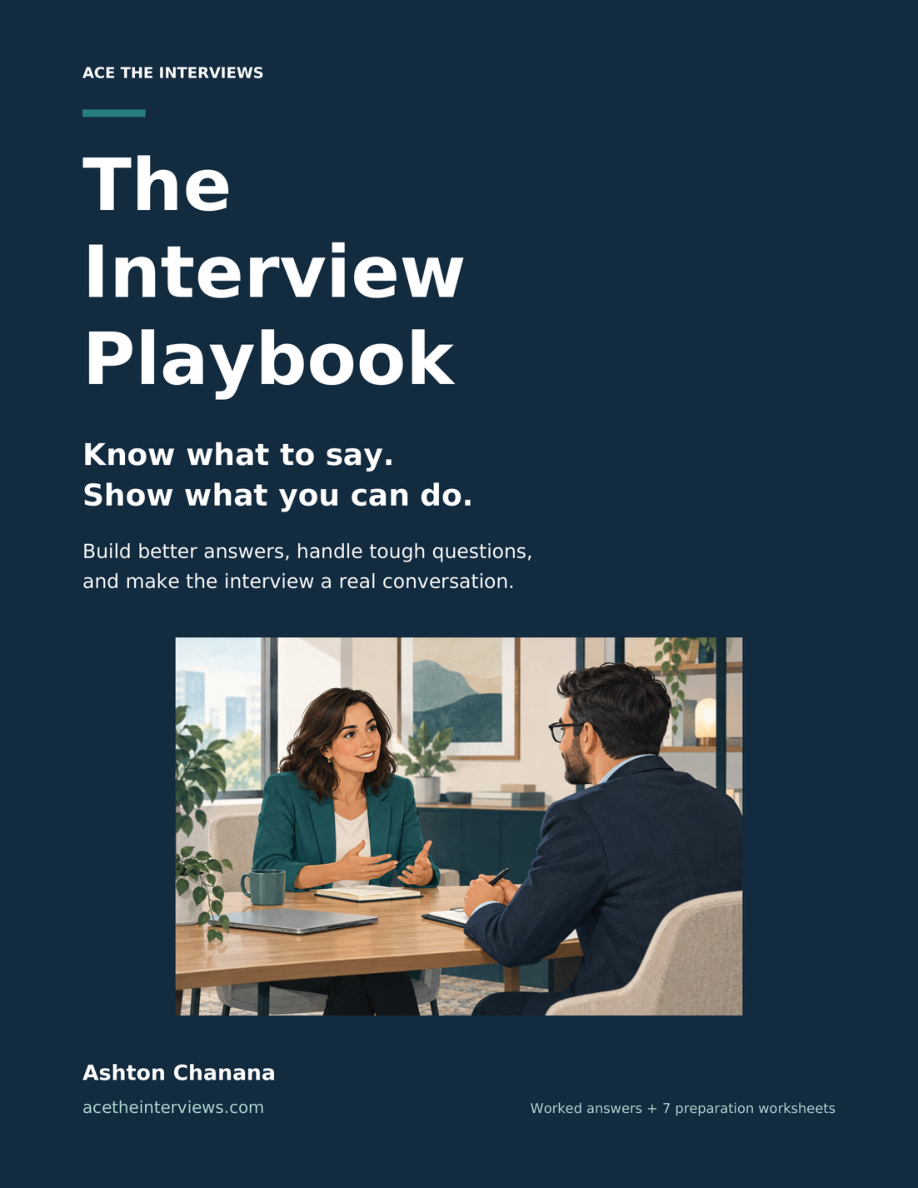
The Interview Playbook eBook gives you practical strategies for preparation, communication, body language, and interview practice that you can start using right away.
Frequently asked questions
How many questions should I ask?
Prepare several options and aim to ask about three if time allows. If the interviewer is wrapping up, ask your most important unanswered question and clarify next steps.
What if they answered all my questions already?
Say that the discussion covered your main questions, then ask a specific follow-up about something they mentioned. You don’t need to ask an irrelevant question just to fill time.
Can I ask whether the internship could lead to a job?
Yes, if that matters to you. Ask how future opportunities are considered and what the process looks like. Don’t assume a return offer is part of the internship.
Is this the same as an internship exit interview?
No. These questions help you evaluate an internship before being hired. An exit interview reviews your experience when the internship is ending.



Comments