
10 Common Interview Mistakes and How to Avoid Them

Updated: Oct 3

An interview does not have to be flawless to be useful. A brief pause, a nervous moment, or a question you cannot answer immediately does not mean the conversation is over. Focus your preparation on the things that help an employer understand your experience.
These ten common mistakes are worth checking before your next interview. Each has a practical correction you can make without memorizing a script.
1. Preparing for a job title instead of the actual role
Read the description and identify the main responsibilities. Two account manager jobs can involve very different customers and expectations. Choose examples that connect to this employer's needs rather than giving the same answer everywhere.
For example, one account manager role might focus on renewals while another focuses on winning new customers. For the renewal role, prepare a story about spotting a risk and agreeing on a recovery plan. For the new-business role, choose an example showing how you qualified an opportunity and earned the next meeting. The same job title does not make the same story equally useful.
2. Researching without deciding what matters
You do not need to recite the company's history. Understand what it offers, who its customers are, and what you want to learn about the role. Turn your research into a relevant question or a clear reason for your interest.
3. Memorizing complete answers
A memorized answer can become difficult to adapt when the interviewer asks a follow-up. Prepare key points and real stories instead. Practice saying the same answer in more than one way.
Try rehearsing one story three times: once in two minutes, once in one minute, and once after a partner interrupts with a question. Keep the facts consistent, but change the level of detail. If you can explain why you made a decision without returning to a memorized opening, your preparation is helping you have a conversation.
4. Giving claims without examples
“I am a strong communicator” leaves the interviewer to guess what that means. Explain a time you clarified a problem, coordinated a handoff, or helped someone make a decision. Make your contribution visible.
In sales and leadership, I find a specific example more useful than a polished description of someone's strengths. The example gives us something concrete to discuss.
5. Spending too long on the background
Give enough context to explain the problem, then move to your actions and the result. If you notice that you are losing the thread, say, “The main point is…” and return to it. Let follow-up questions bring out the additional detail.
6. Answering before understanding the question
You can ask for clarification. Try: “Would you like an example of how I handled a customer issue, or how I improved the process afterward?” A short check is better than a long answer to a different question.
7. Overstating your role or results
Explain what you owned and what colleagues contributed. Use figures you can support, with the time period and context. If you do not know the exact number, say that and describe the outcome accurately.
Suppose a team campaign produced 40 qualified leads and you wrote the email sequence. Explain the team result, then identify your contribution: the messaging, the testing, and what you changed after reviewing responses. Do not imply that you created all 40 leads alone. Clear boundaries make your experience easier to trust and give the interviewer better follow-up questions.
8. Leaving practical details until the last minute
Confirm the time, location or link, and any requested materials. Test your technology for a video call. Ask about the dress code if it is unclear. If a delay happens, contact the coordinator promptly and give a realistic update.
9. Using your questions only to impress
Your questions should help you understand the job. Ask about expectations, support, and how the team works. If your prepared questions have already been answered, follow up on something the interviewer said.
If the interviewer mentions a busy onboarding period, ask, “What would you expect me to handle independently by the end of the first month, and what support would be available?” That gives you useful information about the workload and learning process. Listen to the answer before asking your next question; a relevant follow-up usually helps more than completing a prepared list.
10. Treating follow-up as pressure for a decision
A short thank-you note can confirm your interest and refer to the conversation. A status check should respect the timeline the team gave you. Keep applying elsewhere while you wait rather than assuming one interview guarantees an offer.
A useful final preparation check
Before the meeting, choose three or four relevant stories, practice your introduction aloud, and write down a few questions you still need answered. That is more useful than trying to eliminate every sign of nerves.
Use our STAR method guide to organize your examples and our follow-up email guide after the conversation.
Ready to walk into your next interview with confidence?
The Confident Interview Method gives you a focused, one-hour way to choose stronger examples, answer difficult questions, and speak clearly without memorizing a script. Start here if you want a complete preparation process you can reuse before future interviews.

The Confident Interview Method
$29
One focused hour with 10 practical lessons you can use in your very next interview.
“After spending hours reading blogs and articles, I am so glad that I bought this. It covered what I think are the most important parts of interviewing. Thanks for making this so concise.” - Drew Whitehead
Prefer a faster, lower-cost option?
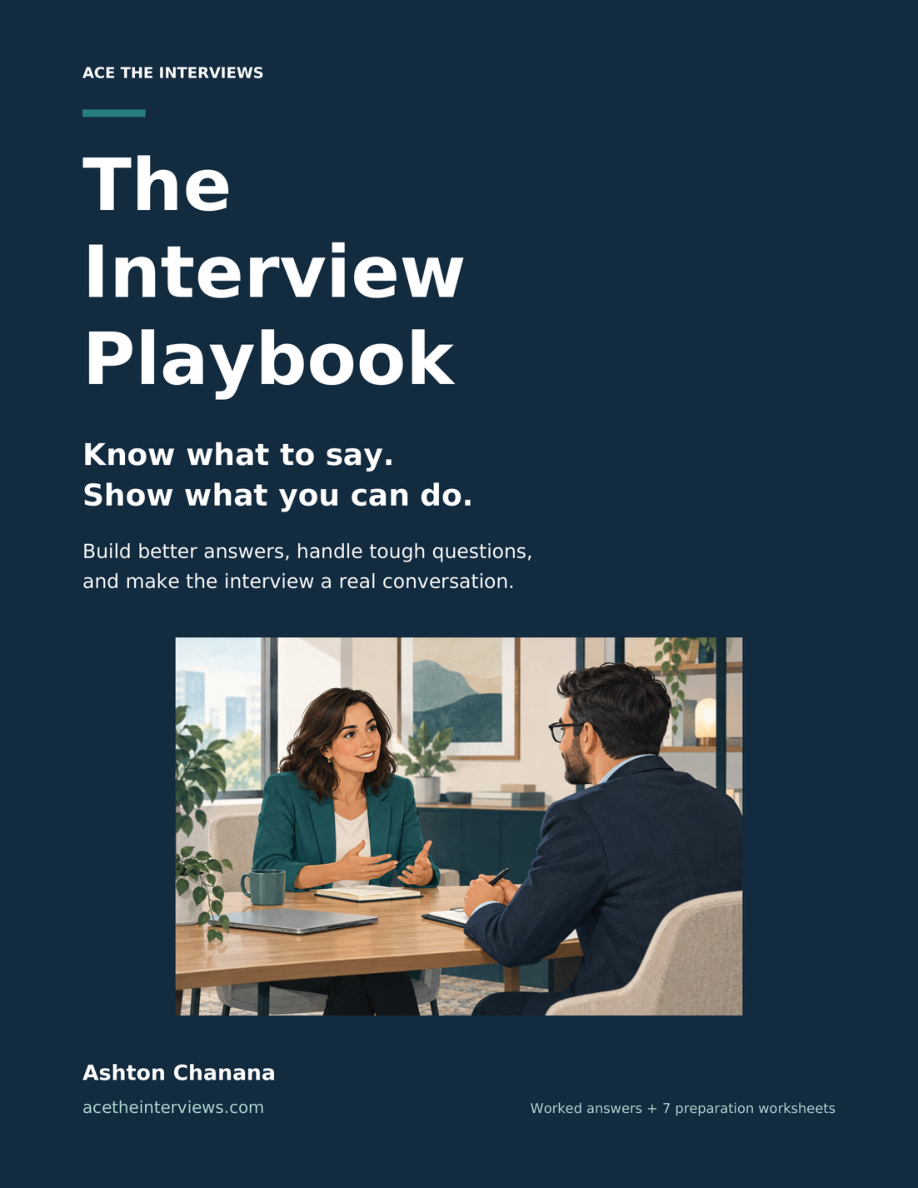
The Interview Playbook eBook gives you practical strategies for preparation, communication, body language, and interview practice that you can start using right away.
Frequently asked questions
What if I realize I gave an unclear answer?
You can clarify it during the conversation. Say, “Let me make that more specific,” and give the missing detail. Avoid restarting the entire answer unless the interviewer asks you to.
Is it okay to admit I do not know something?
Yes. Be direct, then explain how you would find out or which related experience you can draw on. Do not guess just to avoid saying you are unsure.
Can I bring notes?
A short list of questions and reminders can help. Follow the employer's instructions for any assessment, and avoid reading complete interview answers from the page.
How do I learn from an interview that did not go well?
Write down the questions that were difficult and identify one or two changes to make. If feedback is available, use it. Do not assume you know the reason for a rejection when the employer has not explained it.



Comments