
Body Language in Interviews: How to Feel More Comfortable
Updated: Oct 10

You do not need to perform confidence with a perfect handshake, constant eye contact, or carefully copied gestures. In an interview, a more useful goal is to stay comfortable enough to listen and explain your experience clearly.
Body language is part of a conversation, but it cannot reliably tell an interviewer whether someone is honest, capable, or interested. People communicate differently. Your preparation should support the discussion rather than make you monitor every movement.
Start with a clear greeting
Introduce yourself, thank the interviewer for meeting with you, and follow their lead on where to sit. A simple “It's good to meet you” is enough. If a handshake is appropriate and comfortable for you, you can offer one; it is not a requirement for a good interview.
Before you arrive, check the meeting location or video link so the opening minutes feel less rushed. If you need an arrangement that helps you participate comfortably, raise it with the coordinator.
Find a position you can maintain comfortably
Sit in a way that lets you breathe and speak without strain. You can shift position when you need to. There is no single posture that proves confidence, and crossed arms do not automatically mean someone is defensive.
Keep water and notes within easy reach. If holding a pen or resting your hands helps you concentrate, use that approach. You are aiming for a conversation, not complete stillness.
Show listening through your responses
Eye contact can help some people connect, but sustained eye contact is uncomfortable or distracting for others. Look toward the interviewer in a way that feels natural, and use your words to show that you are following.
For example: “You mentioned that the team is changing its onboarding process. Could you tell me where the new hire would be involved?” That response demonstrates attention more clearly than trying to nod at prescribed intervals.
In sales and leadership, I pay more attention to whether someone understands the question and responds to it than to whether their gestures match an ideal. A useful follow-up question is a strong sign that the conversation is moving somewhere.
Use gestures naturally
You can gesture when it helps explain an idea. There is no need to keep your hands fixed or deliberately copy the interviewer's movements. If a habit distracts you, such as repeatedly clicking a pen, choose a quieter alternative before the meeting.
Do not treat every sign of nerves as a mistake. You can pause, take a sip of water, or ask for a moment to think. Then return to the question and the example you want to share.
Adjust the setup for video interviews
Place the camera where your face is easy to see and use lighting that works for your space. Check the microphone and framing before the call. When you listen, looking at the person on screen is normal; you do not need to stare into the camera throughout.
If you refer to notes, keep them brief and close to the screen. Let the interviewer know if you need a moment to check a detail. A small pause is preferable to reading a long answer word for word.
Practice the conversation, not a performance
Record one answer and review whether you can hear the main point, understand the example, and follow the result. If the setup or a repeated habit distracts from those points, make one adjustment and try again.
Spend more preparation time on your examples than on polishing your entrance. Our guides to difficult interview questions and introducing yourself can help you prepare that substance.
Ready to walk into your next interview with confidence?
The Confident Interview Method gives you a focused, one-hour way to choose stronger examples, answer difficult questions, and speak clearly without memorizing a script. Start here if you want a complete preparation process you can reuse before future interviews.

The Confident Interview Method
$29
One focused hour with 10 practical lessons you can use in your very next interview.
“After spending hours reading blogs and articles, I am so glad that I bought this. It covered what I think are the most important parts of interviewing. Thanks for making this so concise.” - Drew Whitehead
Prefer a faster, lower-cost option?
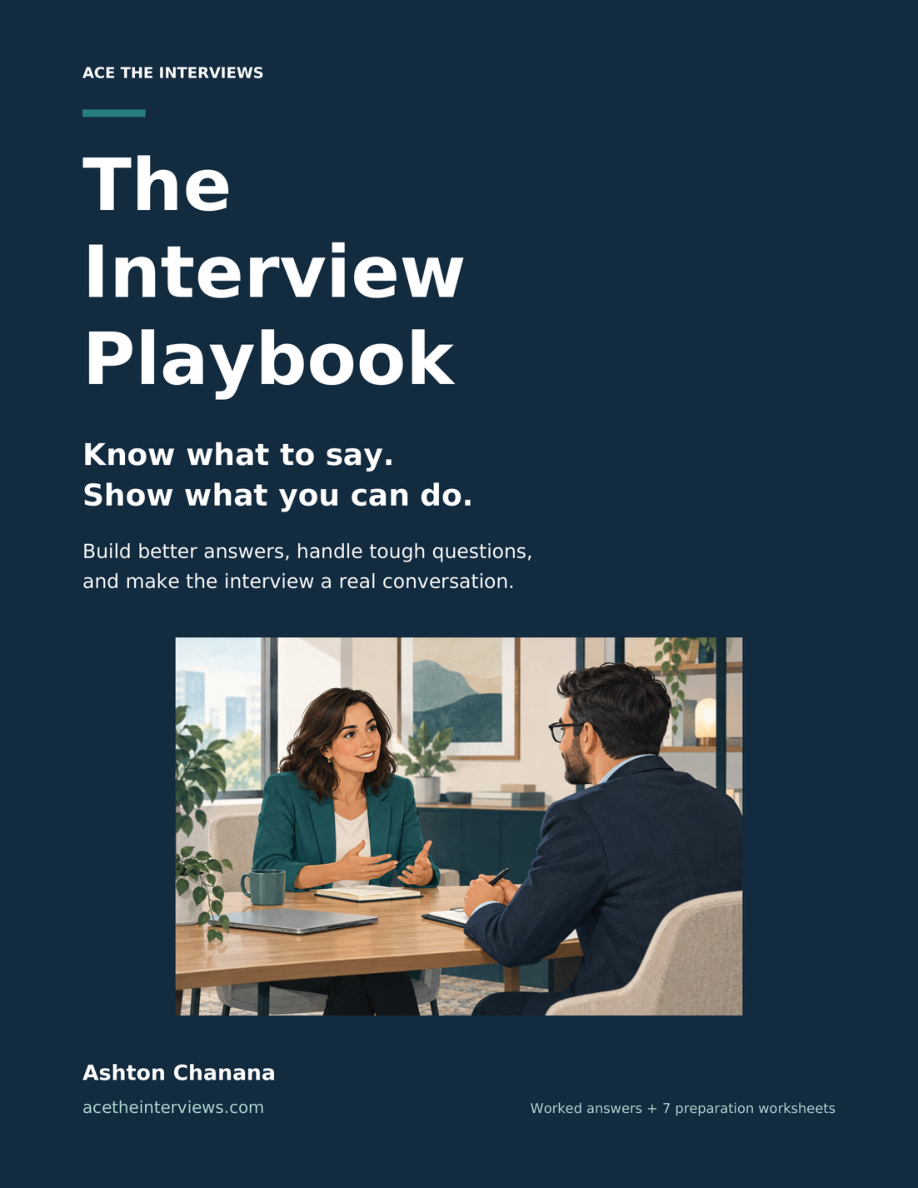
The Interview Playbook eBook gives you practical strategies for preparation, communication, body language, and interview practice that you can start using right away.
Frequently asked questions
How much eye contact should I make?
There is no percentage you need to achieve. Use an approach that feels comfortable and helps you listen. You can demonstrate attention by responding to the question and asking relevant follow-ups.
Is fidgeting going to ruin my interview?
A nervous movement does not erase your experience or your answers. If a habit distracts you, choose a quieter alternative. Focus on explaining your examples clearly rather than suppressing every movement.
Should I mirror the interviewer?
You do not need to copy their gestures. Respond naturally to the conversation. Listening carefully and asking a useful question is a more practical way to build rapport.
What should I do if I feel uncomfortable on camera?
Test your setup and practice one short answer beforehand. Choose comfortable seating, keep notes brief, and ask the coordinator about any arrangement you need to participate.



Comments